
Cast Resin vs. VPI vs. Pad & Pole-Mounted
Four transformer families cover the vast majority of distribution-class projects. Each was designed for a different environment and load profile — picking the right one early in design saves rework, money, and field surprises.
Engineers and contractors ask us this question almost daily: “Should I use a cast resin, a VPI, or a pad-mount here?” The honest answer is “it depends” — but the dependencies are predictable. This guide gives you the framework we use ourselves.
Quick Comparison
| Attribute | Cast Resin | Dry-Type VPI | Pad-Mounted (Liquid) | Pole-Mounted (Liquid) |
|---|---|---|---|---|
| Insulation | Epoxy resin (cast) | Vacuum-pressure impregnated varnish | Mineral or natural ester oil | Mineral or natural ester oil |
| Typical Voltage | ≤ 36 kV | ≤ 35 kV | ≤ 35 kV | ≤ 35 kV |
| Typical kVA | 112.5 – 25,000 | 112.5 – 15,000 | 45 – 10,000 | 10 – 167 (single-phase typical) |
| Environment | Indoor, humid, dirty, fire-sensitive | Indoor or outdoor enclosure | Outdoor at grade, public-accessible | Outdoor, overhead distribution |
| Fire Performance | Excellent — F1 class, self-extinguishing | Good — no oil, but varnish is combustible | Containment required for mineral oil | Limited fault energy, lower risk |
| Maintenance | Very low — visual only | Low — periodic cleaning | Periodic oil sampling, gasket checks | Periodic visual, oil sampling |
| Initial Cost | $$$ (highest) | $$ | $$ | $ (lowest) |
| Lifetime Loss Cost | Higher core loss | Moderate | Lowest losses | Low |
Cast Resin Transformers
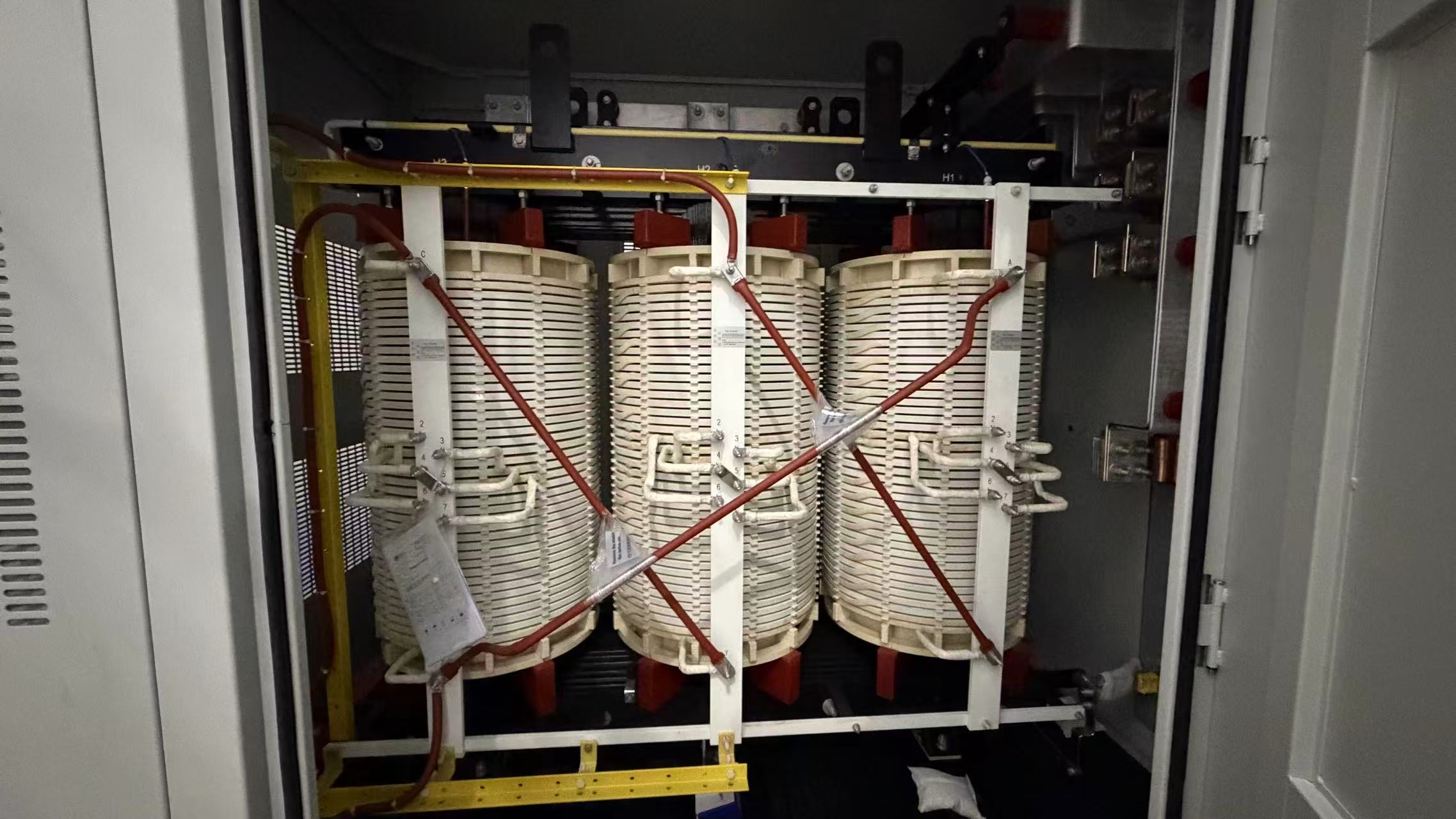
Cast resin (also called “epoxy resin” or “VCEC”) windings are encapsulated in a vacuum-cast epoxy block. The result is a transformer that is essentially a solid object — no air gaps in the insulation, no varnish to age, no oil to leak.
Choose cast resin when:
- The transformer lives in a humid, salty, or chemically aggressive environment.
- Fire codes or insurance carriers require an F1 fire-class unit (hospitals, high-rises, tunnels, ships, mines).
- Frequent overload or short-time excursions are expected — the encapsulated winding handles thermal shock well.
- You need IP-rated enclosures up to IP54 or IP55.
Trade-offs: Higher initial cost (15–30% above VPI), heavier, longer lead times, and core losses tend to be slightly higher than oil-filled equivalents.
Dry-Type VPI Transformers
VPI (Vacuum Pressure Impregnated) units use varnish drawn into the windings under vacuum and pressure. The result is a less hermetic but lower-cost dry-type design that has been the workhorse of indoor distribution for decades.
Choose VPI when:
- Indoor or sheltered outdoor location with controlled humidity.
- Cost-sensitive project where cast resin is overkill.
- Standard commercial, light industrial, or institutional service.
- You want a good balance of price, efficiency, and serviceability.
Trade-offs: Less tolerant of high humidity and contaminated environments. Varnish does age over decades. Not recommended for hazardous or extremely dirty locations.
If the building has continuous HVAC and the electrical room stays under 60% RH, VPI is usually the right choice. If the unit is in a substation, parking deck, mechanical penthouse, or coastal environment — go cast resin.
Pad-Mounted Liquid-Filled Transformers
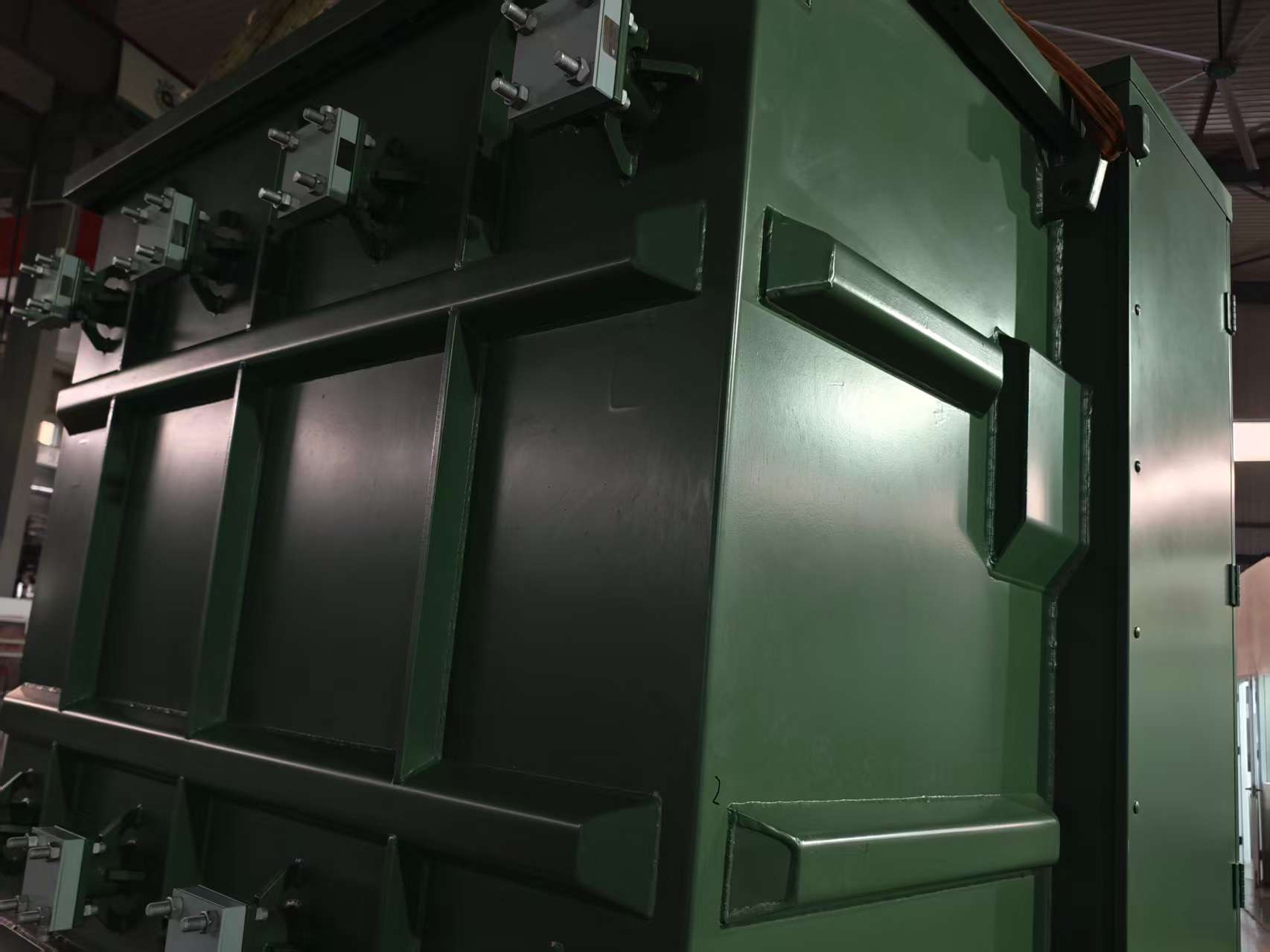
Pad-mount units sit on a concrete pad outdoors, usually serving underground residential or commercial distribution. Their tamper-resistant enclosure makes them safe to install at grade, accessible only to utility personnel.
Choose pad-mount when:
- Outdoor, at-grade installation in commercial, retail, or residential service.
- Underground distribution feeders (loop or radial).
- You want the lowest losses for a continuous load — oil-immersed units are very efficient.
- Solar farm or wind farm collection systems (inverter step-up duty).
Trade-offs: Requires concrete pad, oil containment for larger units (typically > 100 gallons of oil), and clearance from buildings per NEC and NFPA. Service requires a qualified utility crew.
Pole-Mounted Transformers
The classic utility distribution transformer — bolted to a wood or composite pole, typically single-phase, serving overhead residential and small commercial loads.
Choose pole-mount when:
- Overhead distribution system, urban or rural.
- Smaller load (typically 10–167 kVA single-phase, or 30–500 kVA three-phase bank).
- Cost is the dominant constraint and overhead service is acceptable.
Trade-offs: Lifecycle exposure to weather, lightning, and animal contact. Replacement requires line truck access. Less suitable as the area becomes more developed.
Decision Framework
If you’re stuck choosing, walk through these four questions in order:
Transformer Type Decision Flow
- Indoor or outdoor? Indoor → cast resin or VPI. Outdoor → pad or pole.
- Overhead or underground? If outdoor: overhead → pole, underground → pad.
- What’s the fire risk and code requirement? If oil is restricted (high-rise, hospital, tunnel) → cast resin. Otherwise the dry vs. oil choice opens up.
- What’s the environment doing to the unit? Coastal, humid, dirty, or chemically aggressive → cast resin. Clean, conditioned electrical room → VPI.
What About Loss Evaluation?
For utilities and large industrial buyers, lifecycle loss cost can dominate the purchase decision. Liquid-filled transformers generally have lower no-load (core) losses than dry-types of the same kVA. Over 30 years at typical loading, that difference can run into tens of thousands of dollars per unit. If your purchase spec doesn’t already capitalize losses, ask us — we’ll run the numbers for both options.
Send us your application — environment, kVA, voltage, and any code constraints. We’ll quote the two best-fit options side by side so you can compare on price, lead time, and lifecycle cost.
Need Help Choosing the Right Transformer?
Our engineers will recommend the best fit for your environment and load profile.