
Transformer Applications Across Industries
From a 100 kVA pad-mount feeding a strip mall to a 50 MVA power transformer at a refinery substation, the same physics is doing very different jobs. This guide walks through how transformers are selected for the industries we work with most.
A transformer’s job sounds simple — change voltage from one level to another with as little loss as possible — but the right transformer for one industry is often a poor fit for another. The differences come down to environment, load profile, fault duty, regulatory requirements, and lifecycle cost. Here’s how that plays out across six common industries.
1. Oil & Gas and Petrochemical
Refineries, midstream compressor stations, and offshore platforms run heavy rotating loads — large induction motors driving pumps, compressors, and crackers — in environments that are hot, salty, and often classified as hazardous (Class I, Division 2 in much of the U.S. Gulf Coast).
Typical specification points:
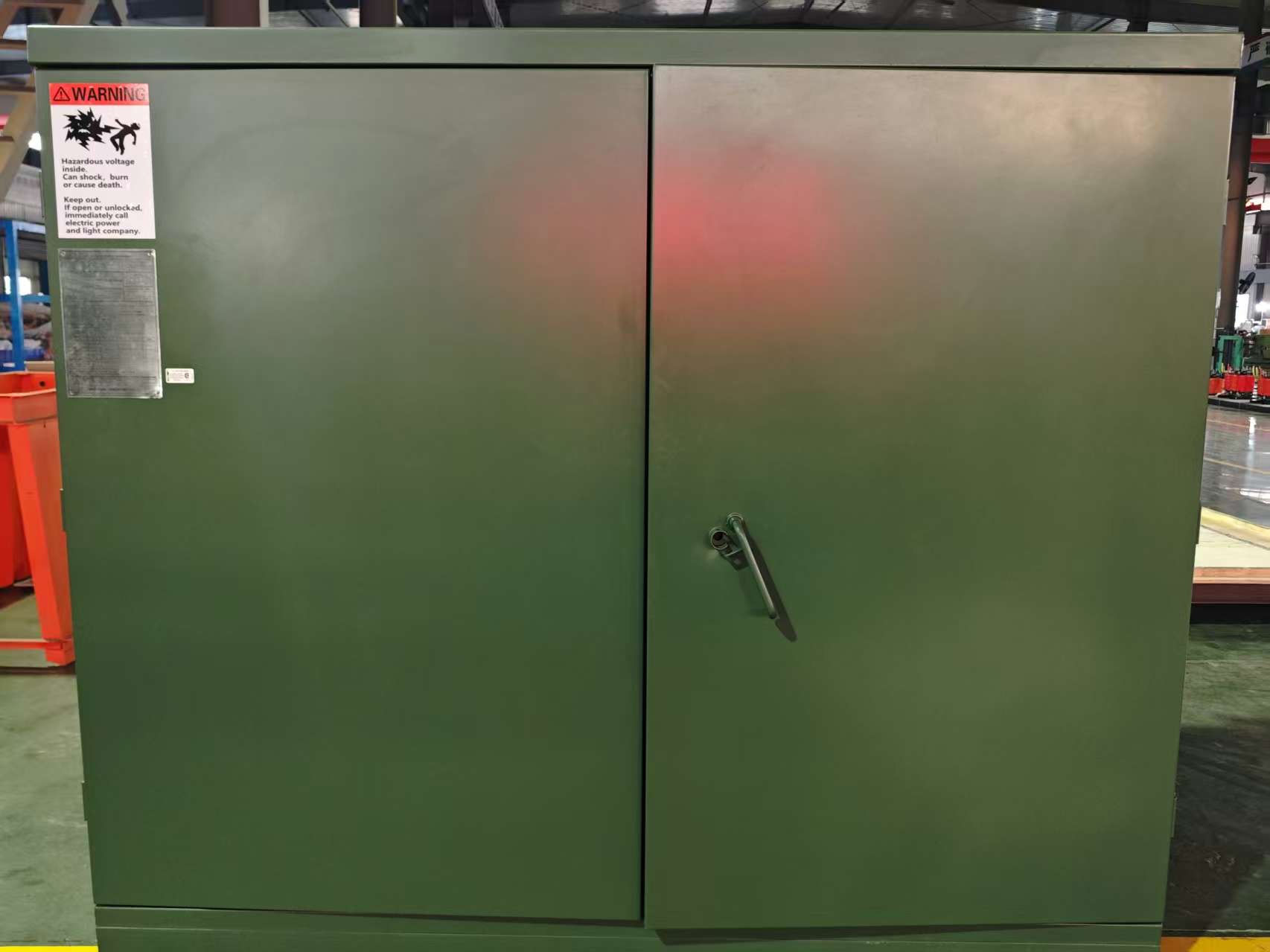
- Liquid-filled or sealed dry-type outdoor units, often pad-mount style with stainless or galvanized enclosures to resist corrosion.
- Higher BIL ratings and conservative loading factors (often 80% nameplate) because emergency replacement on a remote site can take weeks.
- Vector groups chosen so motor starting inrush doesn’t trip upstream protection.
- Special considerations for harmonics from VFDs driving large motors — K-rated or harmonic-mitigating designs are common.
2. Data Centers
Modern hyperscale and colocation data centers are dominated by continuous, non-linear electronic load. The transformer never really gets a break, and the load has significant harmonic content from server power supplies and UPS rectifiers.
That drives a different shopping list:
- Cast resin or VPI dry-type indoor units in the electrical room (no oil, low fire load).
- K-13 or K-20 rated to absorb harmonic heating without derating.
- Lower no-load losses — at 24/7/365 operation, every watt of core loss is paid for in cooling tonnage too.
- Often paired with redundant 2N or N+1 distribution architecture, so each transformer is sized to carry full load alone.
For data center work we often quote both a cast resin and a VPI option side by side. Cast resin wins on humidity tolerance and fire performance; VPI usually wins on cost and lead time. The decision often comes down to insurance carrier preference.
3. Renewable Energy — Solar & Wind
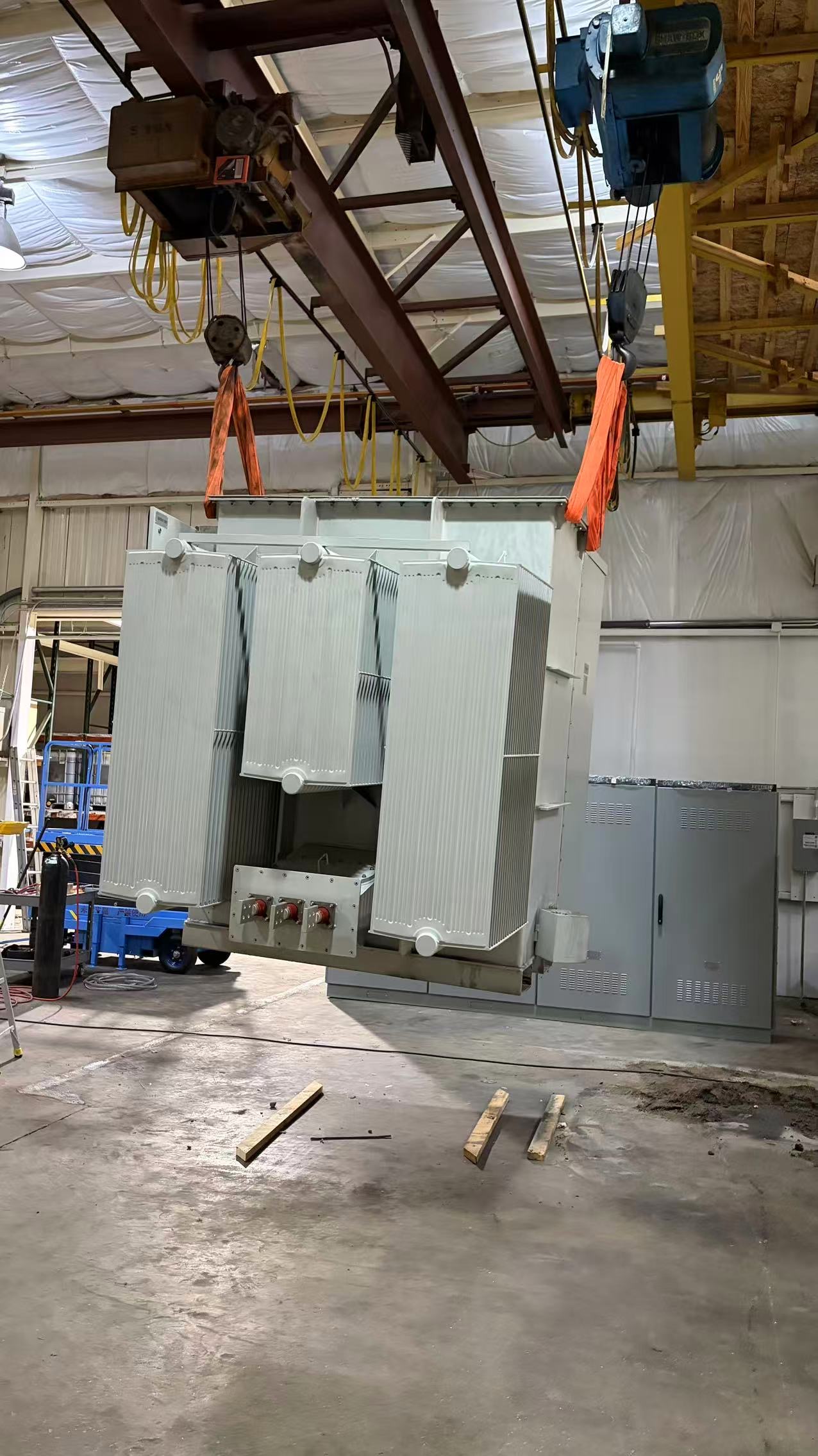
Utility-scale solar farms use inverter step-up transformers (often called “skid” or “padmount” inverter duty) that take 600–800 V from the inverter up to 34.5 kV for collection. Wind farms use a similar arrangement at the base of each turbine.
What’s unusual here:
- The load is unidirectional from the LV side most of the time but bidirectional during reactive power support — protection schemes have to handle both.
- Daily thermal cycling is brutal — hot full output during the day, near-zero at night. Insulation systems have to tolerate that for 25+ years.
- Loss evaluation is aggressive: developers capitalize losses at $4–8 per watt over project life, which justifies premium core steels and larger conductors.
4. Industrial Manufacturing
Discrete manufacturing plants — auto, food & bev, packaging, plastics — typically have an incoming MV service feeding several distribution transformers that step down to 480 V or 208 V for plant equipment.
Specification themes:
- Indoor dry-type units (cast resin or VPI) are dominant for fire safety inside the plant envelope.
- Sized with reasonable diversity — actual demand is often 60–70% of connected load.
- Process-critical lines (e.g., glass float lines, paper machines) sometimes get redundant feeders so a single transformer fault doesn’t shut the line down.
- Welding and induction-heating loads add harmonics — K-factor selection matters.
5. Utility & Distribution
For investor-owned and municipal utilities, the transformer fleet is the asset. They buy in volume and live with the choices for 30–40 years.
- Pole-mounted liquid-filled units (typically 10–167 kVA) for overhead distribution.
- Pad-mounted units (typically 25 kVA–5 MVA) for underground residential and commercial distribution.
- Specs are tightly aligned to IEEE C57 and to the utility’s own internal standard, which often dictates losses, audible sound, and tank construction in detail.
- Loss evaluation drives design — even a $50/year loss difference, capitalized over 30 years, can move a $30k transformer purchase decision.
6. Commercial & Mixed-Use Buildings
Office towers, hospitals, university campuses, and retail centers are usually fed from the utility at MV (typically 12.47 kV or 13.8 kV) and step down to 480/277 V for building distribution, and again to 208/120 V for receptacles.
- Lower-loss NEMA TP-1 / DOE 2016 efficiency units are required by code in the U.S.
- Sound levels matter — a transformer in a hospital electrical room next to an OR has to be quiet (often 5–10 dB below NEMA standard).
- Diversity factors are aggressive (40–60%), but designers should account for future EV charging load, which is changing this calculus quickly.
How to Use This in Your Specification
Three questions resolve most application disputes early:
The 3-Question Spec Framework
Send us your single-line diagram and load list — our engineers will mark up a transformer recommendation at no cost, typically within 2 business days.
Ready to Spec Your Transformer?
Get a quote tailored to your application, environment, and load profile.